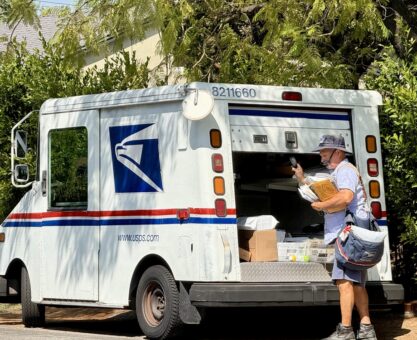



The U.S. Postal Service is facing a financial crisis serious enough that Postmaster General David Steiner went before a House Oversight subcommittee this week to deliver a straightforward message: without congressional action, USPS will run out of cash within 12 months and may be unable to deliver the mail.
It is not a new problem, but it has reached a point where the options being discussed are significant ones.
The Numbers Behind the Crisis
USPS does not receive tax dollars for operating expenses. It relies entirely on postage revenue and service fees, and it has been losing money for the better part of two decades. The agency ended fiscal year 2025 with a net loss of $9.5 billion and posted an additional $1.3 billion loss in just the first quarter of 2026. It has also reached the ceiling on its statutory borrowing authority, a $15 billion cap that has not been updated since 1992.
Mail volume tells much of the story. USPS handled 213 billion pieces of mail in 2006. By 2025, that number had fallen to 109 billion, a decline of nearly 50% driven by the shift to digital communication and paperless billing.
What the Postmaster General Is Asking For
Steiner is requesting that Congress raise the agency’s borrowing limit, allow USPS to increase postage prices beyond current regulatory caps, and reform how the agency handles retiree benefit obligations and workers’ compensation costs. On stamp prices, he has been pushing for a rate between 90 and 95 cents, still among the lowest in the developed world. France charges the equivalent of nearly $3 per letter. England charges around $2.50.
The Staffing Picture
USPS currently employs approximately 635,000 workers, making it one of the largest employers in the United States and one of the largest civilian employers in the federal space. Over the past four years, the agency has already reduced its workforce by roughly 35,000 employees through attrition and restructuring. More than 10,000 additional employees accepted voluntary early retirement offers last year.
Steiner told lawmakers this week that he has not ruled out involuntary separations through a reduction in force if the agency’s financial position continues to deteriorate. He also indicated that USPS is moving toward a workforce model with a higher proportion of non-career employees relative to career employees.
Operational Changes Under Consideration
Beyond workforce adjustments, Steiner outlined several operational options that are actively being evaluated. Reducing mail delivery from six days to five days per week would save approximately $3 billion annually. Closing small post offices in remote areas would save an estimated $840 million. Steiner acknowledged that both options “may not be palatable to Congress or the American public” but said that in a crisis, everything has to be considered.
What Congress Is Being Asked to Decide
The Government Accountability Office testified alongside Steiner, telling lawmakers that USPS cannot resolve its structural financial problems on its own and that congressional action is required. The core question facing lawmakers is what level of postal service the country needs, and how to fund it.
That includes deciding whether the universal service obligation, which requires USPS to deliver to every address in the country at a uniform price regardless of cost or location, remains feasible under the current funding model.
For now, mail is still being delivered on schedule. But the Postmaster General’s testimony this week made clear that the decisions being made, or not made, in Congress over the coming months will determine what the Postal Service looks like for years to come.