


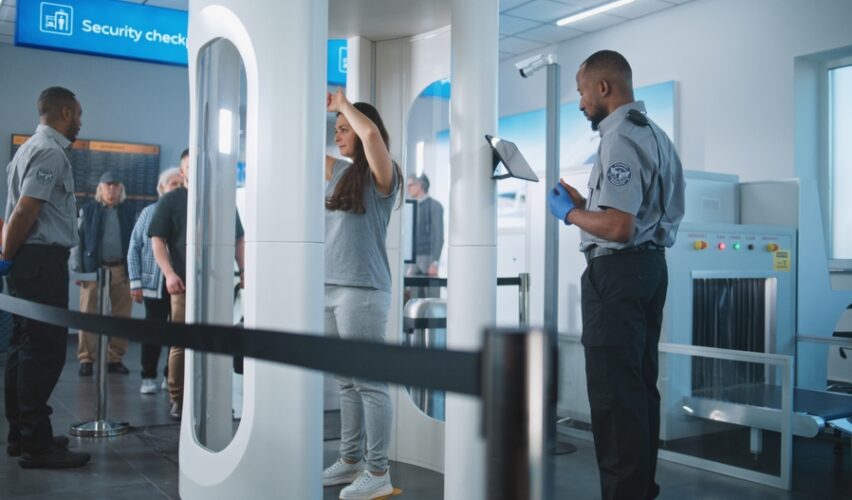
As spring break crowds surge through U.S. airports, roughly 50,000 Transportation Security Administration (TSA) officers have spent weeks working without consistent pay, caught in the middle of the longest partial government shutdown in U.S. history.
The partial government shutdown, which began February 14, 2026, has now stretched beyond 47 days. While most of the federal government remains funded, the Department of Homeland Security (DHS) has been at the center of a prolonged political standoff, leaving TSA officers, classified as essential workers, reporting to duty without reliable pay and facing mounting financial strain.
There were signs this week that a resolution could be within reach, but those hopes were put on hold. The Senate passed a bipartisan bill to fund most DHS operations, including TSA, and sent it back to the House. However, during a brief session, the House declined to take up the measure, effectively punting action and ensuring the partial government shutdown will continue at least into next week. The next opportunity for movement is expected during another procedural session, though a full resolution may not come until lawmakers return from recess in mid-April.
The proposed legislation would fund DHS through the end of the fiscal year but excludes new money for Immigration and Customs Enforcement (ICE) and parts of Customs and Border Protection (CBP). That omission has sparked opposition from hard-line House Republicans, even as party leadership has signaled some willingness to move forward with a two-step approach—reopening DHS now and addressing immigration enforcement funding separately.
At the center of the impasse is a dispute over immigration enforcement funding. House Republicans have pushed for full DHS funding that includes border and enforcement priorities, while Senate Democrats have focused on reopening core operations first. The disagreement has led to repeated failed negotiations and extended uncertainty for tens of thousands of federal workers.
In the meantime, the impact on TSA operations has been significant. With officers missing multiple paychecks, financial pressure has driven increased absenteeism and attrition. Hundreds of officers have reportedly left the agency since mid-February, worsening existing staffing shortages. Call-out rates have risen sharply in some locations, contributing to longer security lines and operational strain at major airports during a peak travel period.
Some financial relief has begun to reach TSA workers. Following executive action, DHS was directed to reallocate available funds to support TSA payroll, allowing many officers to receive retroactive pay for missed periods. While that has eased immediate financial stress and may help stabilize staffing in the short term, it does not resolve the broader shutdown or guarantee continued pay if the impasse continues.
For TSA officers and their families, uncertainty remains. While recent developments suggest a possible path toward reopening DHS, a final agreement is not yet in place. Until then, tens of thousands of essential workers continue to report for duty under challenging conditions, underscoring how even critical federal employees remain vulnerable to political gridlock.